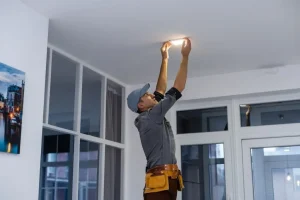
Have you ever been reading a book or working at your desk when suddenly your lights start flickering? At first, it’s subtle—a tiny blink here and there—but soon it becomes constant. Your eyes hurt, your focus disappears, and you can’t help but feel like something is wrong. That’s exactly what happened in my home. For weeks, my ceiling lights would flicker randomly, sometimes in every room.
At first, I thought it was a minor issue. I even imagined that the whole apartment building might have electrical problems. Calling an electrician crossed my mind, but I wanted to try fixing it myself first—partly because I like DIY challenges and partly because electricians can be expensive for something that might be simple.
What I learned is that flickering lights are almost always fixable without professional help, provided you know what to check and the precautions to take. After some trial, error, and research, I managed to fix all the flickering lights in my home. Here’s how I did it.
Understanding Why Lights Flicker
Before jumping into solutions, it’s important to understand why lights flicker. There are several common causes, and identifying the right one is key to solving the problem effectively.
Loose or Faulty Bulbs
The simplest cause of flickering is a bulb that isn’t seated correctly in its socket. Even small gaps can cause intermittent flickering. Certain types of bulbs, like LEDs, are particularly sensitive to loose connections.
Dimmer Switches and Incompatible Bulbs
If your room has dimmer switches, not all bulbs work well with them. I had LED bulbs on a dimmer, and they flickered almost immediately after installation. The issue wasn’t the wiring; it was incompatibility.
Voltage Fluctuations
Sometimes flickering is due to inconsistent voltage in your home. Appliances like refrigerators or air conditioners can draw a lot of power when they start up, temporarily reducing voltage to other circuits and causing lights to flicker.
Wiring Issues
While this is less common, loose wiring or connections inside the fixture, switch, or circuit can cause flickering. This can be dangerous, so it’s important to approach carefully and check safety first.
Step-by-Step Solution I Used to Fix Flickering Lights
Once I understood the potential causes, I approached the problem methodically. Here’s the step-by-step process that worked for me.
Step 1: Safety First
Before touching any electrical fixtures, I turned off the main switch for the room I was working in. Using a non-contact voltage tester, I double-checked that the wires were not live. Safety is non-negotiable; even small mistakes with electricity can be dangerous.
Step 2: Check the Bulbs
I started with the simplest step: inspecting the bulbs.
- Turn off the power.
- Remove each bulb.
- Check for damage or loose connections.
- Reinsert the bulb firmly into the socket.
In my case, two of my older bulbs were slightly loose and one had a faint burn mark. Replacing and tightening them immediately stopped flickering in that fixture.
Step 3: Inspect the Fixture and Switch
Next, I checked the light fixture itself.
- I removed the cover and examined the socket for signs of corrosion or loose wires.
- Using a screwdriver, I gently tightened any connections I could see.
I also checked the wall switch. Sometimes flickering is caused by a worn-out switch that doesn’t maintain a steady connection. Replacing an old switch cost me under $5 and fixed a problem I had assumed was complex.
Step 4: Consider the Bulb Type
If your lights are on dimmers, make sure your bulbs are compatible.
- LED bulbs: Need “dimmable” versions for use with dimmer switches.
- CFL bulbs: Also require compatible dimmers.
- Incandescent bulbs: Usually work with most dimmers without issues.
I replaced my incompatible dimmable LED bulbs with proper dimmable versions, and the flickering stopped instantly.
Step 5: Check for Voltage Fluctuations
Some flickering is caused by voltage drops from heavy appliances. I noticed my lights flickered whenever the washing machine or AC turned on. Here’s how I addressed it:
- Avoid using high-power appliances simultaneously on the same circuit as lights.
- Install LED bulbs with built-in voltage stabilizers. These bulbs are slightly more expensive but handle minor fluctuations well.
- In older homes, consider consulting an electrician if fluctuations are frequent. (I only called a professional after everything else failed, and it turned out my issue was minor wiring at the breaker.)
Step 6: Replace the Bulbs if Necessary
After testing and tightening everything, I replaced any bulbs that were old or flickering despite being seated properly. Even new-looking bulbs can be faulty; it’s better to replace them than to guess.
Step 7: Final Testing
Once everything was replaced and tightened:
- Turned on the power.
- Tested each fixture individually.
- Observed whether flickering occurred when other appliances ran.
For me, following these steps fixed every flickering light in the house without calling an electrician.
Practical Tips, Mistakes to Avoid, and Real Insights
After going through this process, I learned several things that might help you:
Tip 1: Start Simple
Always check bulbs first. Many flickering issues are caused by something as simple as a loose or incompatible bulb. I wasted hours initially overthinking the problem.
Tip 2: Don’t Ignore Dimmer Compatibility
Using standard LED bulbs on dimmer switches is a common mistake. Buy the right bulbs, and you’ll save yourself from unnecessary headaches.
Tip 3: Tighten Fixtures Gently
Loose wires in fixtures are common. A gentle tightening can solve flickering, but don’t overtighten or force connections—it can damage sockets.
Tip 4: Observe Patterns
Flickering often happens when specific appliances are running. Noting this can help determine if voltage fluctuations are the cause.
Tip 5: Keep Safety in Mind
Always turn off power and, if unsure, test with a voltage tester before touching wires. DIY can save money, but safety is priority number one.
Tip 6: Consider Quality Bulbs
Cheap bulbs may flicker sooner, especially LEDs. Investing in a few higher-quality, branded bulbs can prevent repeated flickering issues.
Real-Life Examples That Worked for Me
- Kitchen Ceiling Light: Flickered every time the refrigerator started. Replacing the LED with a voltage-stabilized version fixed it.
- Bedroom Dimmer: LED bulbs flickered constantly. Swapped to dimmable LED bulbs designed for my dimmer switch. No more flicker.
- Hallway Light: Old incandescent bulb was loose. Tightened the socket and replaced the bulb—problem solved.
These simple fixes worked in less than a day, saved me a lot of money, and I didn’t have to wait for an electrician.
FAQs
Q1: Can flickering lights be dangerous?
Yes, flickering can indicate loose wiring or voltage issues, which could pose a fire risk. Always inspect and fix promptly.
Q2: Can I fix flickering lights myself safely?
Most flickering caused by bulbs, dimmers, or loose fixtures can be safely fixed with power off and careful inspection.
Q3: Do LED lights flicker more than incandescent?
LEDs are more sensitive to voltage fluctuations and dimmers, so they may flicker if incompatible or poorly installed.
Q4: Should I always replace flickering bulbs?
Not always—sometimes tightening or using the correct type fixes the problem. But if a bulb is old or damaged, replacement is best.
Q5: What if none of these fixes work?
If flickering persists after checking bulbs, switches, and voltage, it could be a wiring issue requiring a licensed electrician. Don’t ignore it, as it could be unsafe.
Conclusion
Fixing flickering lights doesn’t always require professional help. By understanding the common causes—loose bulbs, dimmer incompatibility, voltage fluctuations, and fixture issues—you can take a structured approach to solve the problem.
I started with the simplest fixes, gradually moving to more technical checks, and within a day, all my flickering lights were gone. My home felt brighter, safer, and more comfortable.
If your lights flicker, follow these steps: check bulbs first, inspect fixtures and switches, ensure dimmer compatibility, account for voltage fluctuations, and replace faulty components. Safety always comes first, but with careful observation and basic tools, most flickering issues can be fixed without calling an electrician.
No more annoying blinks, no more eye strain—just steady, reliable light in every corner of your home.